Air ducts quietly carry heated and cooled air throughout the home. When dust, debris, microbial growth, or airflow restrictions collect inside them, comfort and system performance may suffer. Professional duct cleaning uses specialized equipment to remove buildup safely while helping technicians identify leaks, damage, or other ductwork problems needing attention.
Ductwork is easy to overlook because it is often hidden behind walls, ceilings, or floors, yet it plays a vital role in delivering conditioned air throughout your home. Excessive buildup or airflow obstructions can cause uneven temperatures, dusty vents, and reduced system efficiency. Scheduling HVAC service near Flora, IN allows trained technicians to inspect the system and determine whether cleaning, sealing, repair, or replacement is needed. This helps identify the actual cause of comfort issues instead of assuming cleaning is always the solution.
1. What Collects Inside Air Ducts?
Air moving through an HVAC system can carry dust, fibers, pet hair, pollen, and other small particles. Filters capture much of this material, but some debris may enter through gaps, loose connections, open registers, or neglected return areas.
Construction and remodeling can also introduce drywall dust, sawdust, and other debris. Moisture entering the duct system may create conditions that support microbial growth.
Not every layer of ordinary household dust requires immediate cleaning. An inspection helps determine whether buildup is significant enough to affect airflow, cleanliness, or comfort.
2. How Dirty Ducts Can Affect Comfort
Airflow Must Reach Every Room
A duct system should deliver the correct amount of conditioned air to each part of the home. Heavy debris, objects, damaged sections, or poorly designed ductwork can restrict airflow.
Possible warning signs include:
- Weak airflow from certain vents
- Rooms that remain too hot or cold
- Dust appearing soon after cleaning
- Debris visible inside registers
- Unusual odors during HVAC operation
- Noisy or whistling airflow
These symptoms can also come from leaks, incorrect duct sizing, dirty HVAC components, or blower trouble. Professional testing helps separate a cleaning need from another problem.
3. Why Duct Cleaning Is Not a Complete Efficiency Fix
Duct cleaning may improve airflow when heavy buildup or an obstruction is restricting air movement. However, it cannot seal leaks, resize undersized ducts, repair crushed sections, or correct an improperly balanced system.
If conditioned air escapes through gaps, the HVAC equipment may run longer while some rooms remain uncomfortable. Cleaning alone will not stop this air loss.
A complete duct evaluation may include visual inspection, airflow measurement, pressure testing, and leak detection. The findings determine whether cleaning, sealing, repair, or replacement offers the appropriate solution.
4. How Professional Duct Cleaning Works
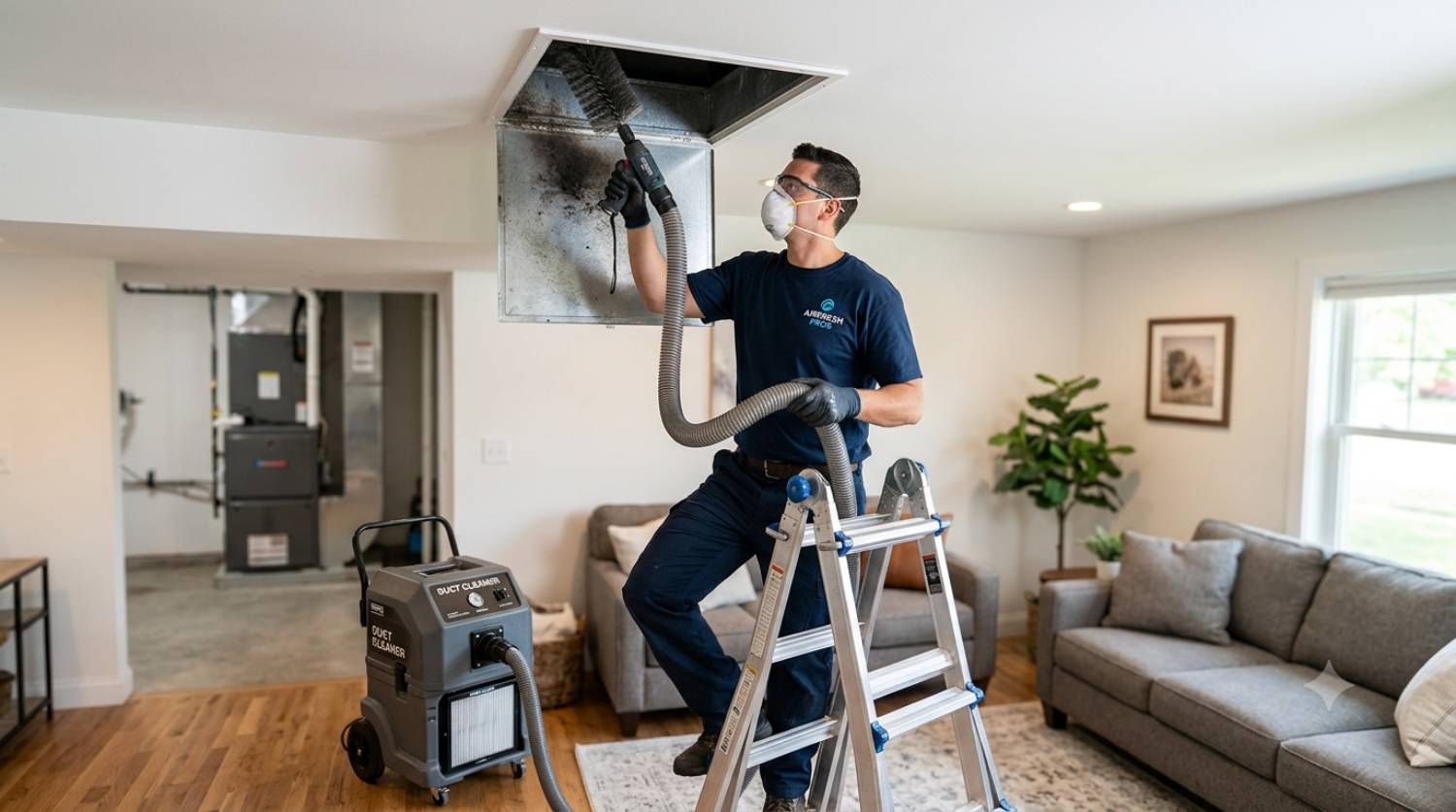
Professional cleaning requires equipment designed for duct materials and system layouts. Technicians create controlled suction and use specialized tools to loosen and remove debris without damaging the ductwork.
The process may include:
- Inspecting accessible duct sections
- Protecting HVAC equipment and living areas
- Connecting collection or vacuum equipment
- Agitating buildup with suitable tools
- Cleaning supply and return sections
- Checking registers and accessible components
- Reviewing the completed work
The exact method depends on the duct material, contamination level, access, and system condition.
5. Why Household Cleaning Tools Can Cause Damage
Air ducts are not designed to be cleaned with ordinary vacuum attachments, mops, or sprays. Flexible ducts can tear, while metal sections and internal liners may be damaged by aggressive tools.
Spraying household cleaners into vents may introduce moisture or chemicals into the airflow. It can also mask odors without addressing their source.
Professional HVAC service near Flora, IN uses equipment suited to the duct system and can identify fragile, loose, or damaged sections before cleaning begins.
Homeowners can safely vacuum removable registers and the area immediately around vent openings. Cleaning deeper inside the system should be left to trained technicians.
6. When Duct Cleaning Deserves Consideration
Duct cleaning is not necessarily required on a fixed annual schedule. It may be appropriate when inspection confirms substantial dust, debris, visible microbial growth, pest contamination, or an obstruction affecting airflow.
It may also deserve consideration after major interior construction if the ducts were not protected. Unexplained odors or material blowing from vents can also justify inspection.
Before scheduling cleaning, ask the contractor to explain what was found, where it is located, and how the proposed process will address it. Clear evidence is more useful than a general claim that every home has dirty ducts.
7. Duct Cleaning and Indoor Air Quality
Cleaning contaminated ducts can remove material that might otherwise circulate or collect near registers. However, indoor air quality depends on the entire home, not the ducts alone.
Filters, humidity, ventilation, moisture control, housekeeping, pets, outdoor pollutants, and HVAC cleanliness all influence indoor air. Persistent dust or odors may have several sources.
A broader indoor air quality assessment may be necessary when cleaning does not address the underlying concern. Air filtration, purification, duct sealing, humidity control, or ventilation improvements may also be appropriate.
8. Why Duct Sealing and Testing Matter
Leaks allow conditioned air to escape and may draw dust or unconditioned air into the duct system. These problems can affect comfort, energy use, and indoor cleanliness.
Duct testing helps technicians measure airflow and identify pressure problems, leaks, or blockages. Sealing closes appropriate gaps and connections after they are located.
Cleaning removes buildup. Sealing limits air leakage. Testing verifies performance. These services solve different problems, but they can work together when the duct system has several concerns.
9. How to Keep Ductwork Cleaner After Service
Good HVAC habits can reduce future buildup:
- Use the correct filter and check it regularly.
- Keep supply and return vents unobstructed.
- Control indoor humidity and repair moisture sources.
- Protect registers during remodeling.
- Schedule HVAC maintenance as recommended.
- Have damaged duct connections repaired promptly.
Avoid installing a filter with more resistance than the system can handle. Ask a technician which filtration option matches the equipment and airflow requirements.
Key Takeaways
Professional duct cleaning can help when inspections reveal significant debris, contamination, or airflow blockages. Specialized equipment allows technicians to clean hard-to-reach areas while minimizing the risk of duct damage.
However, cleaning is not a solution for leaks, poor sizing, damaged ducts, insulation issues, or HVAC problems. Homeowners should request clear evidence and recommendations before approving work. Qualified HVAC service near Flora, IN can assess the entire system and determine whether cleaning, repairs, or replacement is needed. Regular filter changes, moisture control, maintenance, and timely repairs can also improve airflow, comfort, and long-term HVAC efficiency.